
Biodiesel VS Renewable diesel - what s the difference?
Updated: Sep 11

Fleet managers implementing emissions reduction strategies are frequently asked about the difference between biodiesel and renewable diesel.
Others, already familiar with biodiesel, simply ask, "What is renewable diesel?"
Although both reduce greenhouse gas emissions compared with conventional mineral diesel, they are fundamentally different products with significantly different capabilities.
BIODIESEL
Biodiesel is a Fatty Acid Methyl Ester (FAME) produced by transesterification, where vegetable oils or animal fats react with methanol (or ethanol) in the presence of a catalyst to produce biodiesel and glycerine.
Biodiesel is generally blended with mineral diesel, most commonly as B5 or B7, containing 5% and 7% biodiesel respectively.
Higher blends, such as B20, may require approval from vehicle manufacturers because of compatibility and warranty considerations. Some applications may also require modifications to engines or fuel systems.
This significantly limits the potential emissions reductions that can be achieved.
Most importantly, conventional FAME biodiesel cannot generally be used as a complete replacement for mineral diesel. It must typically be blended with conventional diesel.
RENEWABLE DIESEL
Renewable diesel is manufactured using the Hydrotreated Vegetable Oil (HVO) process.
During manufacture, hydrogen removes oxygen from vegetable oils and animal fats, producing a fuel with a chemical structure very similar to conventional diesel.
The leading renewable diesel is HVO100.
HVO100 is a true drop-in renewable diesel that:
Delivers at least a 95% reduction in NGER-measured CO₂ emissions.
Can replace conventional diesel without requiring modifications to vehicles or equipment.
Requires no changes to fuel storage or handling infrastructure.
Requires no changes to maintenance schedules or servicing procedures.
Provides excellent cold-start performance.
Contains no oxygen, providing outstanding storage stability.
Reduces local emissions, including particulate matter and NOx.
HVO100 VS BIODIESEL
Unlike conventional FAME biodiesel, HVO100:
Can be used neat (100%) or blended with mineral diesel in any proportion.
Typically delivers greater reductions in lifecycle greenhouse gas emissions.
Generally achieves lower NOx emissions.
Provides superior cold-flow performance in low-temperature environments.
Has excellent oxidation and storage stability.
Does not readily absorb water, reducing the risk of microbial contamination.
Burns more completely, reducing soot formation and diesel particulate filter loading.
Can reduce maintenance costs through cleaner combustion
HVO100 complies with EN 15940 and the Australian Fuel Quality Standards (Paraffinic Diesel) Determination 2025 and has received approval from many of the world's leading engine and vehicle manufacturers.
Unlike conventional biodiesel, HVO100 can be used as a complete replacement for mineral diesel, maximising potential emissions reductions.
Alternatively, it can be blended with mineral diesel to progressively reduce emissions while managing fuel costs.
PREMIUM OPTIONS
Premium versions of HVO100 are also available.
HVO100 Premium
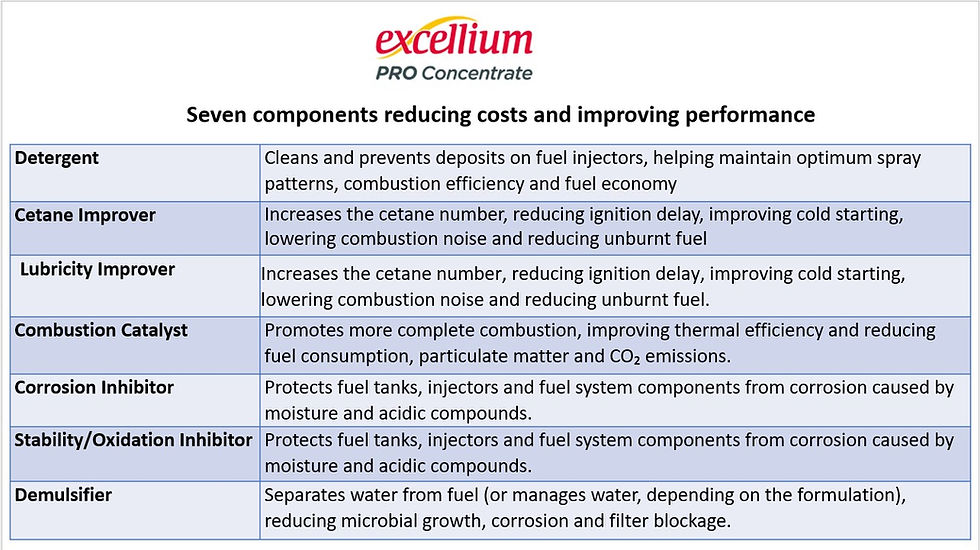
HVO100 Premium combines HVO100 with EPC+, delivering the emissions benefits of renewable diesel together with a further reduction in diesel consumption.
Worldwide fleet trials have demonstrated that EPC+ can reduce average fleet diesel consumption by between 2% and 5%, resulting in an equivalent reduction in fuel costs and tailpipe carbon emissions.
HVO Premium Plus
HVO Premium Plus has been specifically developed for blending with mineral diesel.
It incorporates sufficient EPC+ to reduce the total fuel consumption and emissions associated with both the HVO100 and the mineral diesel within the blend.
This enables businesses to reduce emissions while narrowing the cost differential between mineral diesel and 100% HVO100.
EMISSIONS BENEFITS
Both biodiesel and renewable diesel reduce lifecycle greenhouse gas emissions compared with conventional diesel.
Biodiesel generally reduces carbon dioxide, particulate matter and unburned hydrocarbons, although some blends may produce slightly higher NOx emissions.
Renewable diesel typically delivers more complete combustion, resulting in lower carbon emissions, lower particulate emissions and generally lower NOx emissions.
Because HVO100 can replace mineral diesel entirely, it has the potential to deliver substantially greater emissions reductions than conventional biodiesel.
For businesses seeking to maximise emissions reductions without modifying existing vehicles or infrastructure, renewable diesel is the superior solution.
Most importantly, HVO100 delivers at least a 95% reduction in NGER-measured carbon emissions compared with conventional mineral diesel.
For more information contact - Steve Wilkinson on 0481 055 383 or at steve@greentechfuel.com.au


Comments