
Contaminated diesel is common and expensive - but not necessary.

Contaminated diesel is both common and expensive. It is common because its causes are ubiquitous and can be highly problematic. The causes of contaminated, or "dirty", diesel include water contamination, microbial growth, fungi, mould, yeast, sludge and sediment build-up, oxidation, ageing, and supply chain variability.
Diesel degrades chemically over time when exposed to oxygen, heat, sunlight and certain metals, forming gums, varnish, sludge and sediment. Storage tanks also invariably allow moisture and dust to enter as they breathe, leading to condensation and water contamination, while rust and dust contribute to sediment and sludge deposits.
As diesel ages, bacteria and fungi can grow at the fuel-water interface, producing sludge, acids and biomass. This can result in increased smoke, blocked filters, fouled injectors, corroded tanks and reduced combustion quality. The consequences include higher maintenance costs, increased fuel consumption and reduced performance, resulting in costly efficiency and emissions drift. These issues are especially acute in warmer climates, during long-term storage, and where biodiesel blends are used.
Historically, mineral diesel contained higher levels of sulphur, which contributed to lubricity but also increased acid emissions, particulate pollution and engine deposits. Modern low-sulphur fuels have reduced lubricity, which can present operational challenges but can be addressed through additive technologies such as EPC+. Even clean fuel can perform poorly during combustion if injectors are fouled, air-fuel ratios are incorrect, EGR systems malfunction, or engines idle excessively. This can create soot and carbon deposits, increase particulate matter, NOx emissions and unburnt hydrocarbons. These deposits can then recirculate through turbochargers, EGR valves and DPF systems, generating higher emissions and increased operating costs.
Biodiesel blends can absorb more water, oxidise more rapidly and support microbial growth more readily than mineral diesel, although this depends on the blend ratio and storage conditions. Contamination can occur at any point in the supply chain. Filtration systems, water separators, fuel polishing, additive treatments, tank cleaning and regular testing programmes can all be employed to combat the problem and its effects, creating additional expense and often delivering only limited success.
Fortunately, there is a solution provided by TotalEnergies, the world's fourth-largest energy company. Excellium Concentrates for diesel and petrol are key components of Excellium® Diesel and Excellium® Petrol, which are supplied by TotalEnergies to fleet and industrial customers, independent fuel distributors, and through the company's network of more than 17,000 service stations worldwide, serving approximately eight million customers every day. Through GreenTECH Fuel, this solution is now available in Australia for diesel users.
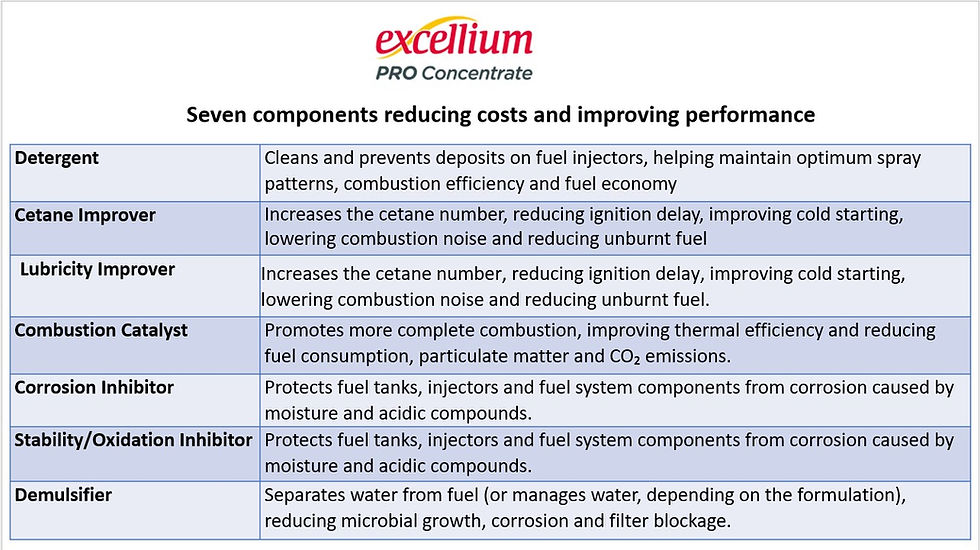
EPC+ contains seven active components: deposit control agents, which clean and keep injectors and fuel systems clean; cetane improvers, which enhance ignition quality and combustion efficiency; corrosion inhibitors, which protect tanks, pumps, injectors and fuel systems; demulsifiers, which assist in separating water from diesel to reduce contamination; friction modifiers, which reduce wear in pumps and injectors; antioxidants, which slow fuel degradation and oxidation; and anti-foam agents, which reduce foaming during refuelling and handling.
Working at sub-micronic levels, these components begin acting immediately after dosing a tank that has previously held untreated fuel or has not been cleaned. EPC+ initiates a clean-up phase, addressing many aspects of dirty diesel by detaching sediments and deposits, carrying them through the fuel flow, separating water to help protect against bacterial growth, and improving the filterability of diesel to enhance the effectiveness of existing filtration systems.
As fresh premium EPC+-treated fuel is introduced into the tank, fuel quality is progressively improved, stabilised and maintained. Contaminants are removed from storage assets and equipment is restored, helping to maintain engine efficiency and performance while reducing fuel consumption, fuel costs and emissions. The result is lower maintenance costs, reduced downtime and improved operational outcomes.



Comments